Recently, I had a conversation with Craig Spencer, a practitioner of Traditional Witchcraft and author, sparked by the resurfacing of an old social media post. The post, which I originally shared in 2022, featured Craig’s words: “It is not the place of Witchcraft to coddle you and become restrained by a need for counterculture.” Its reappearance felt like a clear sign that we needed to revisit this idea. The timing was fortuitous, as both Craig and I had been discussing Witchcraft’s evolving relationship with modern culture.
This reflection also brought to mind a recent conversation I had with my Coven about the role of a Witch in these rapidly changing times. As I considered the synchronicity of these discussions, I recalled a video lecture I had watched by Fred Lamond, a respected Gardnerian High Priest and one of the earliest members of Gerald Gardner’s Bricket Wood Coven. The lecture, titled “Fred Lamond: What I Learned From Gerald Gardner,” was uploaded to YouTube by Gavin Bone and offered profound insights into Witchcraft’s relationship with counterculture.
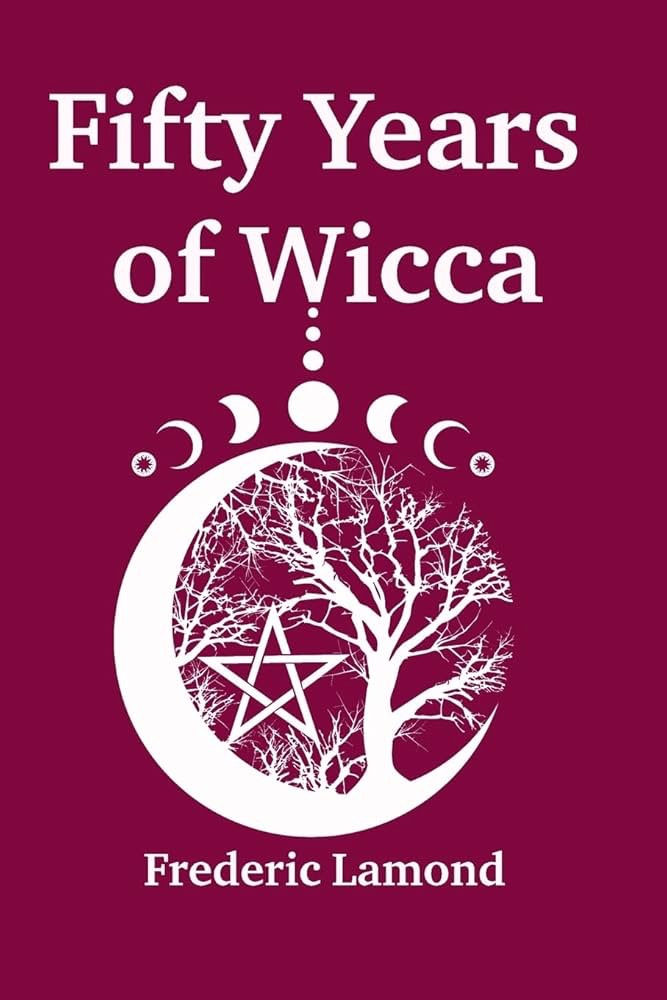
Lamond’s words struck a chord with me. He explained, “One doesn’t want to set out intentionally to shock or seek approval. One should affirm one’s own values fearlessly… neither seeking the approval nor to shock Christianity or any other religion.” This statement is powerful in its simplicity. Lamond emphasizes that Witchcraft should not be reduced to a reactionary stance toward society. Instead, it should be understood as a path of spiritual authenticity and personal truth.
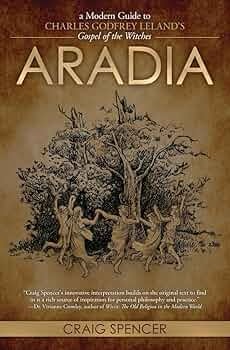
Craig Spencer’s perspective on Witchcraft aligns closely with Lamond’s philosophy. In his book Aradia: A Modern Guide to Charles Leland’s Gospel of the Witches, Craig writes, “The Craft was not born as a reaction to modern political struggles but as a response to humanity’s deep yearning for connection with the divine.” His words reinforce the idea that Witchcraft is fundamentally a spiritual journey, not a countercultural movement. It is about seeking connection with the divine, rather than defining oneself in opposition to societal norms.
Lamond also advocates for a profound shift in perspective. He challenges us to move away from a monotheistic worldview that separates humanity from nature and instead adopt a holistic vision that views humans as an integral part of the natural world. This perspective is one I find deeply liberating. Embracing the idea that we are not separate from nature but rather an extension of it—a reflection of the divine—resonates with the core principles of Witchcraft. It reminds us that we are part of a much larger cosmic web.
Reflecting on these insights, I am struck by how often Witchcraft has been framed as a rebellion, a counterculture challenging societal norms. However, the deeper meanings expressed by Lamond and Craig reveal something far more profound. Witchcraft is not a reaction; it is a sacred action. It is a journey of self-discovery, spiritual alignment, and transformation. It calls us to act in harmony with divine principles and express those principles in all aspects of our lives.
The conversations with Craig, combined with Lamond’s insights, have clarified my understanding of Witchcraft. It is not something that can be confined to societal definitions. Witchcraft is not about seeking approval or rejecting the mainstream. It is about embracing a deeper truth and living authentically, in alignment with our highest spiritual potential.
To me, Witchcraft is not merely a rebellion against the status quo; it is an affirmation of everything that is sacred, divine, and true. It is a timeless path that remains deeply relevant in today’s world, calling us to honor the divine within ourselves and the natural world. And in that sacred calling, we find a path forward.

Works Cited
Lamond, Fred. Fifty Years of Wicca.
Spencer, Craig. Aradia: A Modern Guide to Charles Leland’s Gospel of the Witches.
Lamond, Fred. “Fred Lamond: What I Learned From Gerald Gardner.” YouTube, uploaded by Gavin Bone.
 A Witch Called By Love