Let us begin with the fundamental statement that I do not speak for all British Traditional Witchcraft Initiates. I only speak from my standpoint as a Gardnerian High Priest and base my opinions off my own personal experiences. From my perspective one of the most important things to realize is that initiation is a covenant, not a popularity contest. In British Traditional Witchcraft (BTW), Priesthood is not conferred lightly. It is the result of sustained practice, internal transformation, and transmission through lineage. When someone is made a Priest or Priestess, they are given the full authority to lead, teach, and interpret the Mysteries within their own Coven. That autonomy is not provisional. It does not require external validation, nor does it become void because someone disagrees with how a ritual was conducted or which language was used.
Autonomous Priesthood is the heart of our tradition. Each Coven is its own Circle of Power, equal to all others, answerable to none. This is not mere decentralization; it is theological and magickal in nature. The Gods meet us in the Circle we cast, not on Facebook. To honor this model means to protect it from intrusion, whether it comes in the form of dogmatic correctness, social pressure, or public shaming disguised as accountability. True tradition demands that we recognize the sovereignty of others even when their style, training, or priorities differ from our own.
This doesn’t mean we abandon discernment. Autonomy is not an excuse for abuse or spiritual negligence. But it does mean the only people who need to approve of your work are your initiators, your students, and your Gods. The rest is noise. A healthy tradition upholds shared roots while honoring local variation. Those who mind their own Covens cultivate depth, clarity, and power. Those who cannot let others be, often reveal how little faith they have in their own Circle.
The greatest threat to Priesthood is not theological dispute, it is the ego masquerading as righteousness. Time and again, initiates fall prey to the very human tendency to compare, compete, and control. It is understandable. We crave recognition. We want to be seen as legitimate. But true initiation is a death of the ego. If your Priesthood requires tearing down others, gossiping about strangers, or playing Witchcraft’s version of “mean girls,” then what you are defending is not the Craft, it’s your own insecurity.
British Traditional Witchcraft is built on oaths, not opinions. When we focus on what other initiates are doing (how they run their circles, how they speak of the Gods, who they initiate or exclude) we risk becoming voyeurs of Power instead of vessels of it. This is the problem of humanity: projecting our wounds, fears, and unmet needs onto others in the tradition and calling it “integrity.” But spiritual maturity means learning when to step back, when to let others walk their path, and when to return to our own work.
Boundaries are sacred. Not everyone must be included in your practice. Not every difference is a threat. And not every initiate is your business. When we focus on the integrity of our own Coven and the growth of our students, we realign with what matters. We came to this path to be transformed, not to manage a subculture. Let us return to the altar and ask: Where am I serving ego, and where am I serving the Gods?
Fertility in our rites has never been just about physical reproduction. It is about creative polarity, the dynamic interplay between active and receptive forces, between light and dark, movement and stillness. These energies are not locked into genital configurations, they are cosmic, elemental, symbolic. It’s basic Hermetics. Our rites are rooted in the Mystery of becoming, not in enforcing outdated norms. To reduce polarity to heterosexual sex is to misunderstand the magickal model entirely.
Gender and sexuality are sacred expressions of the Self, and Priesthood must be large enough to hold that truth. Many initiates today embody gender fluidity, queerness, and identities that defy binary frameworks. Instead of seeing this as a problem to be corrected, we should recognize it as an invitation to evolve. The Craft, when practiced well, teaches us that liminality is holy. The edges of identity, the crossings of form and feeling, are where the Gods speak most clearly.
Inclusion is not a dilution of tradition, it is its deepening. To facilitate mysteries for LGBTQ+ initiates, for gender diverse practitioners, is not to “update” the Craft, but to restore its ancient truths: that fertility is creative, not just sexual; that love is divine, not political; that mystery reveals itself in many forms. The ritual is alive when all present feel seen, challenged, empowered, and transformed. Anything less is simply performance. I do not advocate for empty ritual.
It is critical to understand the difference between Tradition and convention. Tradition, in the occult and religious sense, is a transmission of wisdom: a chain of initiation, a body of lore, a sacred rhythm. Convention is simply what we’re used to. Many practices in the Craft were never canon, they were habits. Repeating a thing long enough does not make it sacred; it only makes it expected. Autonomy means having the courage to discern between the two.
We are stewards of living tradition, not curators of a dead museum. That means knowing when to keep the form and when to adapt the function. Some rituals may benefit from inclusive language. Some training systems may be revised for clarity or accessibility. The responsibility of a Priest or Priestess is not to ossify the tradition, but to animate it, to make the rites breathe anew without severing their roots. This is not innovation for its own sake, but devotion to the current of Power that runs through us all.
Organizational leadership teaches that sustainable systems must be both resilient and adaptable. In Priesthood, this means preserving the core mysteries while remaining flexible in delivery. A tradition that cannot adjust to the lived reality of its members will die out, not because it was wrong, but because it became irrelevant. Change must come from within, not from pressure, not from fear, but from a deep, prayerful listening to the Gods and to the work.
At the end of the day, the Craft is not about visibility, validation, or even community. It is about devotion. It is about the time you spend at your altar when no one is watching. It is about the rituals performed in silence, the offerings left in the dark, the prayers whispered in a language older than words. This path demands suffering through surrender. And in that surrender, we become filled with something greater than ourselves, the fulfillment of love which is perpetual happiness.
Devotion also means showing up for the work. It means tending the group, even when it’s hard. It means studying, practicing, failing, beginning again. A Priest or Priestess does not just know the ritual, they become the ritual. Their life is shaped by it, infused with it. They do not serve for applause, nor do they teach to be followed. They do it because the Gods called them, and they answered. Everything else is optional.
In a world obsessed with image, devotion is resistance. In a community obsessed with consensus, devotion is clarity. And in a tradition built on mystery, devotion is the one thing that keeps the fire burning. Let others chase influence. Let others debate doctrine. The true Priesthood returns to the altar, again and again, because that is where the Gods meet us, and that is where the real work begins.
We are not here to police Witchcraft. We are not here to rebrand it, broadcast it, or argue about who’s doing it right (especially on YouTube or in Podcasts). We are here to live it. That means tending to our own spiritual garden: our training, our students, our Gods, and our practice. That is where Power grows. That is where initiation ripens. Everything else, every drama, every public feud, every witch war, is a distraction.
The Circle is enough. If your Coven is doing the Work, then it is enough. If your Priesthood is honest, your rituals deep, your lineage intact, then it is enough. Let others do what they will. Let them find their Gods in their way. The Craft is not weakened by variation, it is weakened by fixation. Autonomy is not the absence of standards; it is the presence of trust.
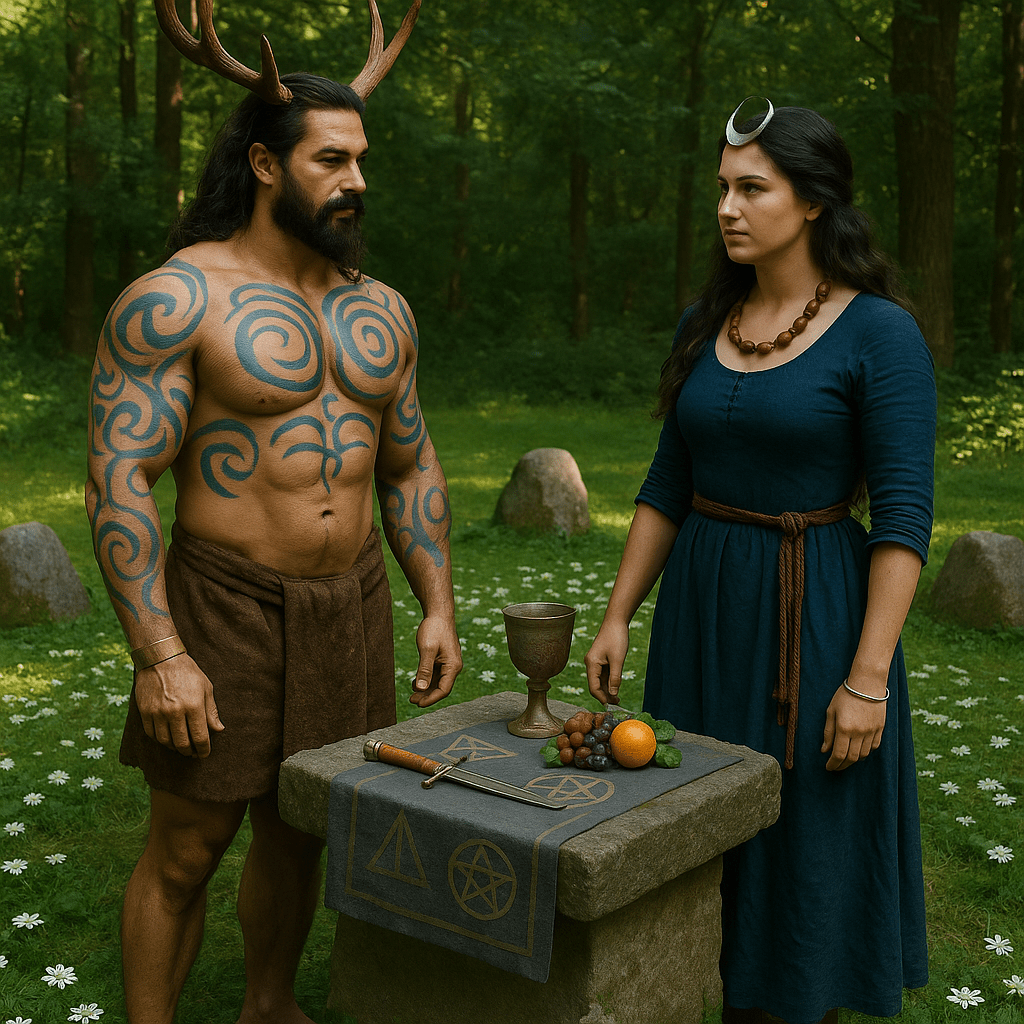
So light your candles and incense. Cast your Circles. Pass the Cup of wine to those ready to receive it. That is all the Gods ask. Mind your own Coven, serve the Mysteries with perfect love, trust, integrity, and remember: The Craft endures, because we do.
 A Witch Called By Love